
The Mysteries of Guan Di Temple 2.0
9 photosIn the heart of Kuala Lumpur’s Chinatown stands the Guan Di Temple, a Taoist shrine built in the late 19th century. It is dedicated to Guan Yu, a legendary Chinese military general who lived in the 3rd century and was later deified. Today, Guan Di is revered as the patron of warriors, a protector against evil forces, and a symbol of loyalty, courage, and justice. Worshippers come here to seek protection, good health, and prosperity. They light incense, make offerings, offer prayers, and perform traditional divination rituals. One of the temple’s most revered objects is Guan Di’s sacred weapon — a heavy Chinese halberd believed to have the power to ward off misfortune when touched. Some of the most mysterious rituals in Chinese folk religion involve spirit mediums known as tang-ki. During a religious trance, a medium is believed to become the earthly embodiment of a deity. The medium may cut his own tongue with a ritual blade and use the blood to inscribe sacred symbols on paper talismans. These talismans are believed to possess protective powers, warding off evil spirits, illness, and misfortune. Similar rituals can be found among Chinese religious communities in Malaysia, although they are not exclusive to the worship of Guan Di. Ancient beliefs, swirling clouds of fragrant incense smoke, extraordinary ceremonies, and an atmosphere of mysticism make Kuala Lumpur’s Chinese temples one of the most fascinating expressions of religious culture in modern Malaysia. The images were generated using AI, based on original photographs taken in 2010.
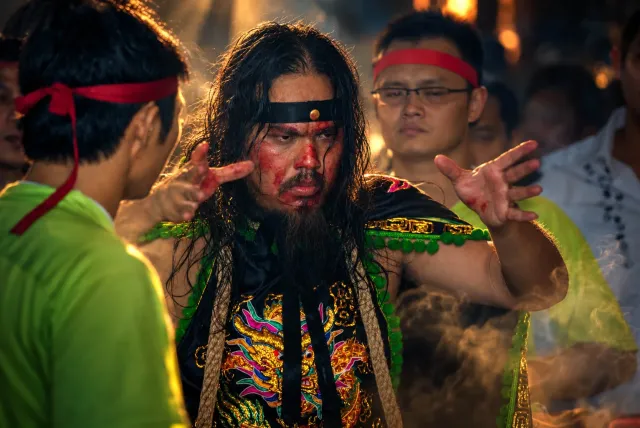 Spirit Medium
The Mysteries of Guan Di Temple 2.0
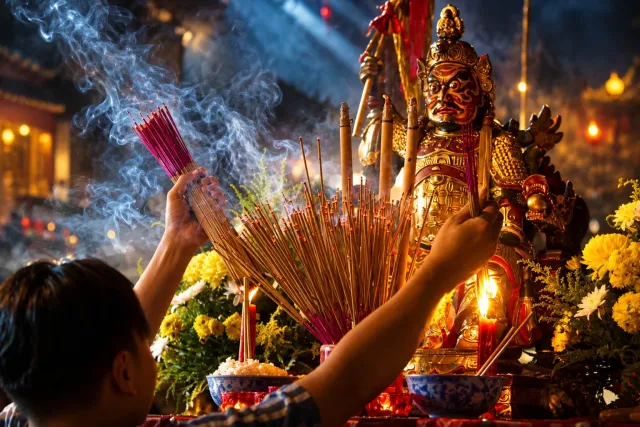 At the Altar
The Mysteries of Guan Di Temple 2.0
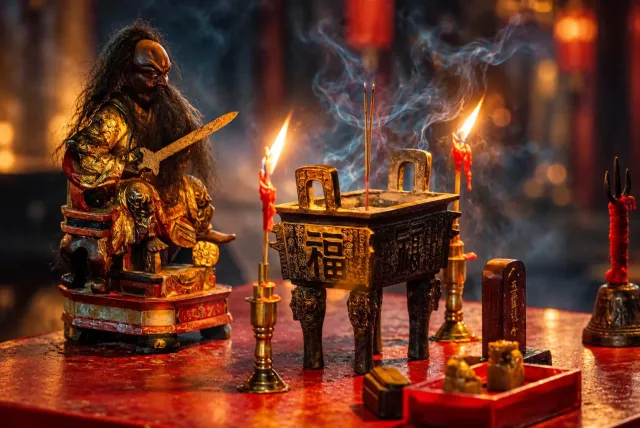 The Warrior Who Became a God
The Mysteries of Guan Di Temple 2.0
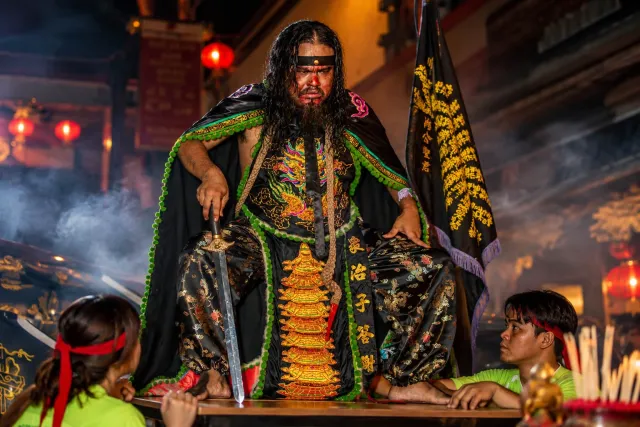 The Protector
The Mysteries of Guan Di Temple 2.0
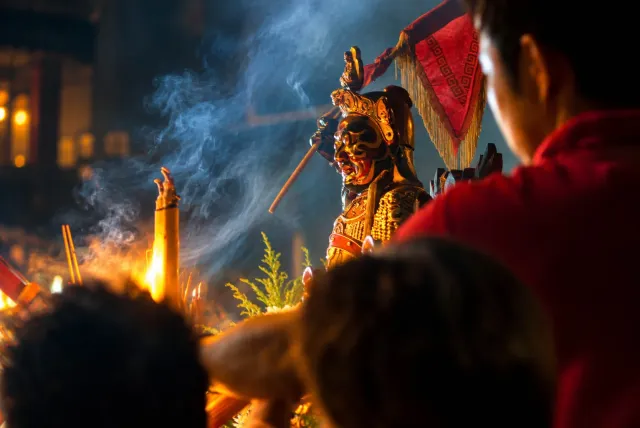 Guan Di Stands Guard
The Mysteries of Guan Di Temple 2.0
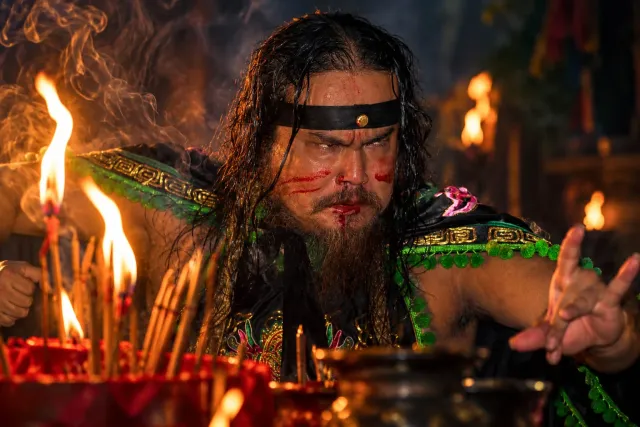 Blood and Fire
The Mysteries of Guan Di Temple 2.0
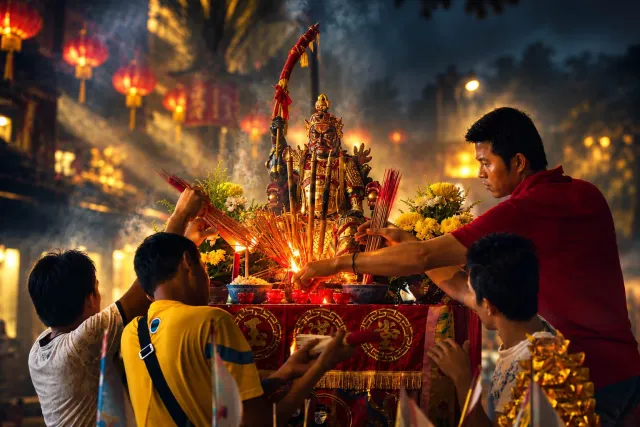 The Sacred Altar
The Mysteries of Guan Di Temple 2.0
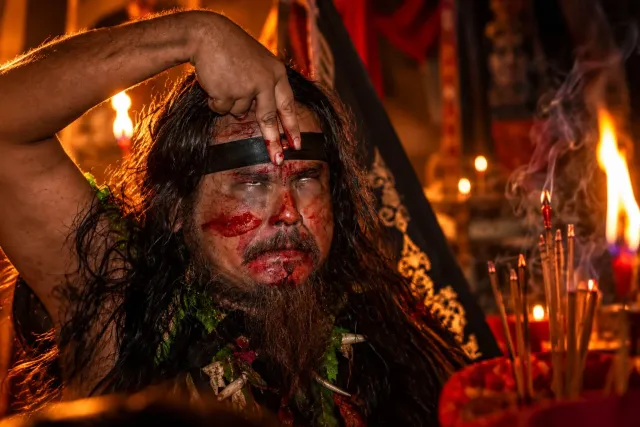 The Blood Ritual
The Mysteries of Guan Di Temple 2.0
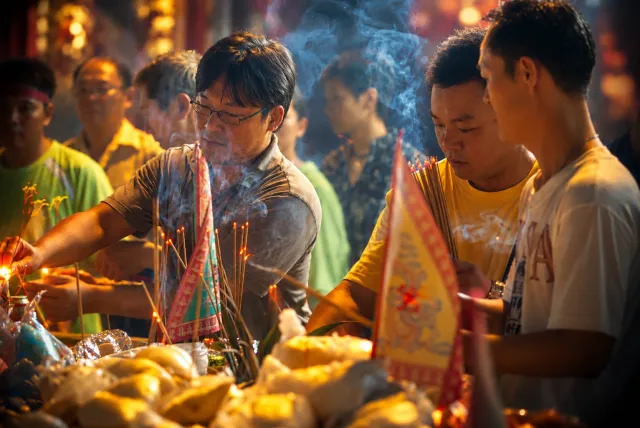 Worshippers pray for protection, good health, and prosperity
The Mysteries of Guan Di Temple 2.0